⚡ Key takeaways
- Hajj is obligatory once for Muslims who are physically and financially able; Umrah does not fulfil this obligation.
- Hajj occurs only during prescribed days of Dhul Hijjah, with dates moving annually in the Gregorian calendar.
- Umrah is available most of the year, subject to Saudi regulations, seasonal demand and travel arrangements.
- Both pilgrimages include ihram, tawaf and sa’i; Umrah concludes with shaving or trimming the hair.
- Hajj includes additional rites at Mina, Arafat, Muzdalifah and Jamarat, making it longer and more demanding.
- Umrah can be valuable preparation for Hajj, offering greater flexibility and a potentially calmer pilgrimage experience.
Umrah vs Hajj: the key differences at a glance
Understanding Umrah vs Hajj begins with their place in Islamic worship. Both are deeply meaningful journeys to Makkah, centred on devotion, prayer and visiting the Sacred Mosque. Yet the key differences affect when you travel, how long you stay and which rites you complete.
Hajj is one of Islam’s five pillars and is obligatory once in a lifetime for Muslims who are physically and financially able to perform it. It takes place only during specific days in Dhul Hijjah, with pilgrims following a defined sequence of rites in Makkah, Mina, Arafat and Muzdalifah. The core pilgrimage generally spans five days, though most guests allow longer for arrival, departure and recovery.
Umrah, often called the lesser pilgrimage, can be performed at almost any time of year. Its main rites, entering ihram, tawaf around the Kaaba, sa’i between Safa and Marwah, and trimming or shaving the hair, can usually be completed within a few hours. It is not a substitute for Hajj where Hajj is required, but it remains an immensely rewarding act of worship.
For many pilgrims, the decision comes down to intention, availability and practical preparation. Hajj brings the scale and intensity of a fixed global gathering; Umrah offers greater flexibility, often a calmer pace, and the chance to shape a more personal stay in the holy cities.
Umrah vs Hajj: Key Differences
| Aspect |
Umrah |
Hajj |
| Timing |
Can be performed at almost any time of year. |
Takes place only during specific days in Dhul Hijjah. |
| Religious obligation |
An immensely rewarding act of worship, but not a substitute for Hajj where Hajj is required. |
One of Islam’s five pillars and obligatory once in a lifetime for Muslims who are physically and financially able. |
| Main rites |
Entering ihram, tawaf around the Kaaba, sa’i between Safa and Marwah, and trimming or shaving the hair. |
A defined sequence of rites in Makkah, Mina, Arafat and Muzdalifah. |
| Duration |
Usually completed within a few hours. |
The core pilgrimage generally spans five days, with additional time often allowed for arrival, departure and recovery. |
| Travel format |
Offers greater flexibility, often a calmer pace and a more personal stay in the holy cities. |
A fixed global gathering with greater scale and intensity. |
Hajj: purpose, obligation and the annual pilgrimage
Hajj is Islam’s great annual pilgrimage to Makkah, required once in a lifetime of every adult Muslim who is physically and financially able to make the journey. Alongside prayer, fasting and zakat, it is a defining Islamic act of worship. To perform Hajj is to join a global community in remembrance, humility and devotion; performing Hajj also calls for careful preparation each year.
When Hajj takes place, the specific days of Dhul Hijjah
Hajj takes place during the first half of Dhul Hijjah, the final month of the Islamic lunar calendar. Its central rites unfold over specific days: pilgrims enter the state of ihram before beginning the journey on the 8th of Dhul Hijjah, known as Yawm al-Tarwiyah. They then travel to Mina, before proceeding to the plain of Arafat on the 9th.
The Day of Arafat is the spiritual heart of Hajj, when pilgrims stand in prayer and supplication from noon until sunset. After sunset, they move to Muzdalifah, then return to Mina for the 10th of Dhul Hijjah, Eid al-Adha, for the stoning ritual at Jamarat al-Aqabah and other rites. The remaining rituals continue through the Days of Tashreeq, usually until the 12th or 13th of Dhul Hijjah. As the lunar calendar is shorter than the Gregorian year, these dates move annually.
Umrah is a sacred pilgrimage to Makkah centred on worship at the Kaaba. Unlike Hajj, which has fixed dates and specific obligations, Umrah can be performed at any time of year, subject to Saudi travel regulations and the practical demands of busy seasons. Its simple, profound rites hold an enduring place in Islamic devotion.
Umrah rituals: Ihram, tawaf, sa'i and completion
The Umrah rituals begin with ihram: a state of consecration entered at the appropriate miqat before reaching Makkah. Pilgrims make their intention for Umrah and recite the Talbiyah. Men wear the prescribed two unstitched white cloths, while women wear modest clothing that meets Islamic requirements without a fixed colour or style.
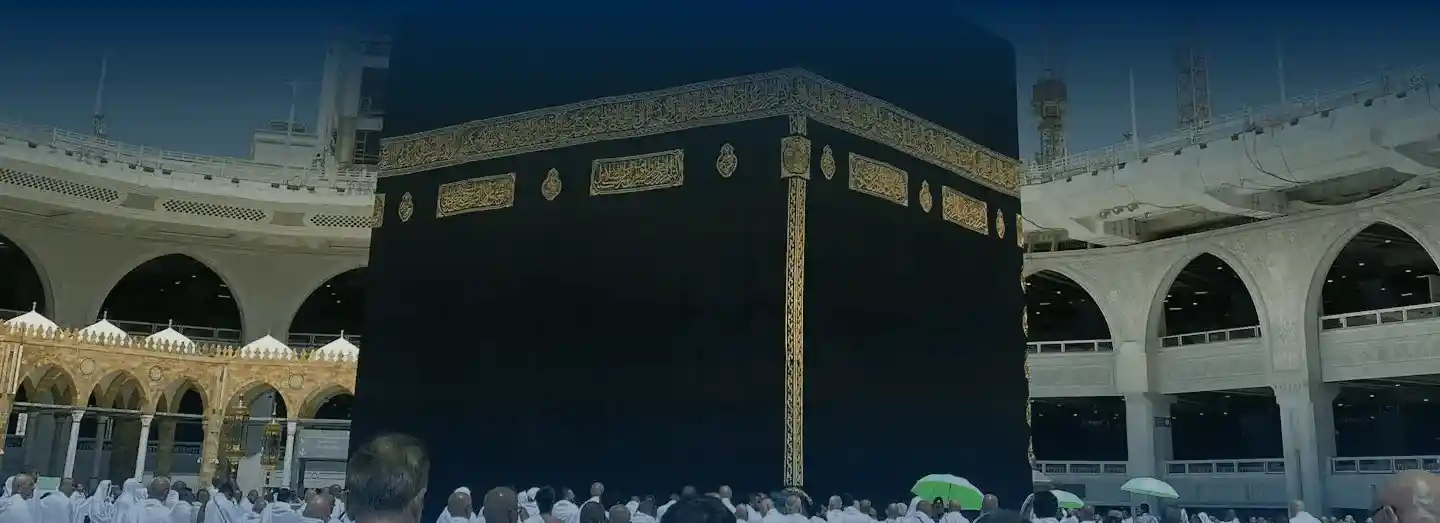
In Masjid al-Haram, pilgrims perform tawaf by circling the Kaaba seven times, keeping it to their left and beginning each circuit in line with the Black Stone where possible. There is no need to push through crowds to touch or kiss it; a gesture from a respectful distance is sufficient.
Sa'i follows, with seven passages between Safa and Marwah, recalling Hajar’s faithful search for water. The journey from Safa to Marwah counts as one passage. To complete Umrah, men shave or shorten their hair, while women trim a small amount. With this final act, the restrictions of ihram end, an Umrah guide’s essential sequence, carried out with calmness and reverence.
Shared rituals, Arabic terms and what is unique to Hajj
Umrah and Hajj share the same sacred setting and much of the same spiritual language, which is why the terms can initially feel interchangeable. Both begin with ihram, the consecrated state entered with a clear intention and observed through specific restrictions. Pilgrims then perform tawaf, circling the Kaaba, and sa’i, walking between Safa and Marwah in remembrance of Hajar’s search for water. These are central rituals of worship, not simply stages on an itinerary.
- Shared rites: ihram, tawaf and sa’i.
- Umrah: can be completed throughout the year.
- Hajj: follows fixed days in the Islamic calendar and includes additional rites.
The Arabic vocabulary is worth learning before you travel, but it need not feel daunting. Miqat is the boundary at which pilgrims enter ihram; dua means supplication; and halq or taqsir refers to shaving or trimming the hair to complete Umrah. In everyday planning, you may see “Umrah Hajj” or “Hajj Umrah” used together, yet they remain distinct pilgrimages with different timings and requirements.
What makes Hajj unique is its fixed place in the Islamic calendar and its additional rites beyond Makkah. During the days of Dhu al-Hijjah, pilgrims travel to Mina, stand in prayer at Arafat, spend time at Muzdalifah and perform the symbolic stoning at the Jamarat. These collective days give Hajj its singular scale and structure. Umrah can be completed throughout the year, while Hajj is undertaken only in its appointed season.
Hajj and Umrah essentials
- Both pilgrimages begin with ihram, a consecrated state entered at the miqat with a clear intention.
- Tawaf means circling the Kaaba, while sa’i is the walk between Safa and Marwah.
- Dua means supplication; halq or taqsir means shaving or trimming hair after Umrah.
- Umrah may be performed throughout the year and is generally completed within Makkah.
- Hajj occurs only during appointed days of Dhu al-Hijjah in the Islamic calendar.
- Hajj includes additional rites at Mina, Arafat, Muzdalifah and the Jamarat.
Can Umrah replace Hajj?
No. In the essential comparison of Umrah vs Hajj, Umrah does not replace Hajj for a Muslim who is religiously, physically and financially able to perform Hajj. Hajj is one of Islam’s five pillars and is required once in a lifetime for those who meet the conditions of ability. Its rites take place on prescribed days in Dhul Hijjah and include standing at Arafat, an act that has no equivalent in Umrah.
Umrah is a deeply meaningful pilgrimage in its own right. It includes entering ihram, tawaf around the Kaaba, sa’i between Safa and Marwah, and cutting or trimming the hair. It may be performed throughout the year, subject to Saudi travel arrangements and seasonal restrictions. Yet even a beautifully completed Umrah, whether made once or many times, does not fulfil the separate obligation of Hajj.
There is an important practical distinction for pilgrims considering a Hajj package: those undertaking Hajj al-Tamattu perform Umrah first, then begin a new state of ihram for Hajj during the same journey. In that case, both acts of worship are completed, but the Umrah remains distinct from the Hajj rites. If Hajj is currently beyond a person’s means or health, the obligation may be deferred until they are able; it is not exchanged for Umrah.
The right choice depends on your intention, readiness and the time available to you. Umrah can be performed throughout most of the year and offers a deeply meaningful opportunity to visit Makkah without the scale, fixed dates or physical demands of Hajj. For many pilgrims, it is also a valuable first experience: you can become familiar with the rites, the Sacred Mosque and the practical rhythm of travelling in Saudi Arabia before returning for the greater pilgrimage.
Hajj, however, is a once-in-a-lifetime obligation for Muslims who are physically, financially and practically able to undertake it. Performing Hajj requires more preparation than umrah: bookings, permits, travel arrangements and accommodation are tied to specific dates in Dhul Hijjah, while the crowds and distances involved call for careful consideration of health and mobility. If you already have the means and a realistic path to secure your Hajj arrangements, it may be wise to prioritise it rather than delay an obligation you are able to fulfil.
If Hajj is not yet feasible, umrah remains an excellent and rewarding journey. It can renew your spiritual focus, help you prepare emotionally for Hajj and allow you to travel at a pace better suited to your circumstances. Perfect Umrah can help you consider the practical differences, so your journey reflects both your intention and your readiness.
Choosing Umrah or Hajj
- Prioritise Hajj if you are physically, financially and practically able to fulfil this once-in-a-lifetime obligation.
- Choose Umrah when Hajj arrangements are not yet feasible, or you need a more flexible travel timeframe.
- Consider your health and mobility, as Hajj involves larger crowds, longer distances and more demanding days.
- Review Hajj booking windows, permits, accommodation and travel requirements well before Dhul Hijjah.
- Use Umrah as a valuable introduction to the rites, the Sacred Mosque and travelling in Saudi Arabia.
- Match your decision to your sincere intention, available time, budget and emotional readiness.
Planning Hajj or Umrah from the UK
For UK travellers, planning Hajj or Umrah begins well before flights and hotels. The right guide will help you compare packages, understand the practical sequence and allow enough time for official approvals. Use this Umrah guideline as a calm starting point, then confirm current requirements with your chosen provider and Saudi authorities.
Documents, visas and health checks to confirm before booking
Before paying a deposit, check that every traveller’s passport has the validity required for entry and that names, dates of birth and passport numbers match the booking exactly. Hajj and Umrah pilgrims should establish which Saudi visa route applies to their nationality, travel dates and itinerary; requirements, permitted entry points and processing arrangements can change.
For Hajj, book only through an authorised route for UK pilgrims and follow the instructions issued for that season. For Umrah, do not assume a previous visa or a standard tourist arrangement covers every planned activity. Read the latest Umrah guideline from official Saudi channels, then ask your operator what documentation it needs before ticketing.
Health preparation deserves the same early attention. Check current Saudi vaccination and health-entry rules, including any certificates or deadlines, and speak to a GP or travel-health clinic about your own needs. Carry copies of insurance, prescriptions and medical letters, particularly for regular medication. Perfect Umrah can help you understand your package paperwork, but official rules remain the final authority.
Pre-booking document checklist
- Check each passport meets Saudi entry-validity requirements before paying any deposit.
- Match names, birth dates and passport numbers exactly against all booking details.
- Confirm the correct Saudi visa route for nationality, travel dates and planned pilgrimage activities.
- For Hajj, book only through an authorised UK pilgrim route and follow seasonal instructions.
- Read current official Umrah guidance; do not rely on previous visas or tourist arrangements.
- Review Saudi vaccination and health-entry rules early, including certificate requirements and deadlines.
- Carry insurance, prescriptions and medical letters, especially when travelling with regular medication.
Budgeting for the journey: what affects Umrah cost and Hajj cost
Umrah cost and Hajj cost vary widely because the pilgrimage is shaped by season, departure city, hotel standard, transport, visa arrangements and the number of days away. Rather than choosing on headline price alone, compare what packages include and where compromises may affect comfort, convenience and worship.
How to compare Umrah packages and Hajj packages
Start by comparing umrah packages or hajj packages on a like-for-like basis. A lower quoted figure may cover only flights and a hotel, while another package includes airport transfers, ground transport, visa support, guided ziyarat, meals or a group leader. Ask for a clear written itinerary and a full list of exclusions, including airline baggage allowances, room supplements, travel insurance and any local charges.
Hotel location deserves close attention. A property that appears close to the Haram on a map may involve a steep walk, busy crossings or a shuttle timetable; this can matter greatly for older travellers and families. Check the room occupancy, bed configuration and whether accommodation changes between Makkah and Madinah.
For hajj, ensure the package follows the applicable official allocation and clearly states the camp category, transport during the rites and support available in Mina, Arafat and Muzdalifah. For umrah, flexibility in travel dates can often reduce costs outside school holidays and peak Ramadan days. The right package is the one whose inclusions, pace and level of assistance suit your needs, not simply the cheapest option.
Health, accessibility and travelling with family
Both hajj and umrah can be adapted to different ages and mobility needs with thoughtful planning. The experience is deeply rewarding, but pilgrims should be realistic about heat, crowds and long days on foot. Families, older travellers and anyone managing a health condition benefit from choosing suitable accommodation, transport and support before they travel.
Physical demands: is Hajj harder than Umrah?
Yes, performing hajj is generally more physically demanding than Umrah. The key differences are its fixed dates, far larger crowds and the sequence of rites undertaken across Makkah, Mina, Arafat and Muzdalifah. Hajj involves several intense days, substantial walking, time outdoors and periods when movement is slow because of congestion. Heat can add considerably to the challenge, even for otherwise fit travellers.
Umrah rituals are more contained: entering ihram, tawaf around the Kaaba and sa’i between Safa and Marwah. They can often be completed in a few hours, although this depends on crowd levels and a pilgrim’s pace. Wheelchairs, electric carts and accessible routes are available in the Grand Mosque, but arrangements should be considered in advance, particularly during busy seasons.
For families, Umrah is usually the gentler first journey. Build in rest, hydration and unhurried prayer time; young children and elderly relatives should never be pushed to keep up with a demanding schedule.
Frequently asked questions about Umrah and Hajj
Planning a pilgrimage often begins with practical questions: which journey to make, when to travel and how much time to allow. The central distinction in umrah vs hajj is straightforward. Umrah is a shorter pilgrimage to Makkah that can be performed at most times of the year, while Hajj is the major annual pilgrimage, completed on specific dates in Dhul Hijjah. Both are deeply meaningful acts of worship, but their rites, timings and obligations differ.
Many travellers ask whether Umrah can replace Hajj. For Muslims who are physically and financially able, it cannot: Hajj remains an obligation once in a lifetime, whereas Umrah is generally considered a highly recommended voluntary act. Others wonder how long each trip takes. The core Umrah rites may be completed within a few hours, though most guests stay several days to pray in Masjid al-Haram and visit Madinah. Hajj requires more planning and usually spans five main ritual days, with travel and accommodation extending the journey further.
Choosing between them depends on your circumstances, available leave and spiritual intentions. Umrah offers flexibility throughout the year; Hajj offers the singular experience of joining Muslims from around the world during its appointed days. Perfect Umrah can help you understand the arrangements, documentation and itinerary that best suit your pilgrimage.
Frequently asked questions
What is the main difference between Umrah and Hajj?
Hajj is a once-in-a-lifetime obligation for Muslims who are physically and financially able, and it takes place only on specific days in Dhul Hijjah. Umrah is a separate pilgrimage that can usually be performed throughout the year and has fewer rites.
Can Umrah replace Hajj?
No. Completing Umrah does not fulfil the obligation of Hajj for someone who is able to perform Hajj. Although both involve ihram, tawaf and sa’i, Hajj includes prescribed rites at Mina, Arafat, Muzdalifah and the Jamarat.
When is Hajj performed?
Hajj is performed during the first half of Dhul Hijjah, the final month of the Islamic lunar calendar. Its main rites begin on the 8th of Dhul Hijjah, with the standing at Arafat taking place on the 9th.
Can Umrah be performed at any time of year?
Umrah can generally be performed at most times of the year, subject to Saudi entry requirements, permits and seasonal arrangements. Availability, accommodation costs and crowd levels may vary considerably, especially around Ramadan and Hajj season.
How long does Umrah take?
The core Umrah rites can often be completed in a few hours. This includes entering ihram, performing tawaf around the Kaaba, completing sa’i between Safa and Marwah, and shaving or trimming the hair. Time varies with crowds, mobility and personal pace.
How long does Hajj take?
The main Hajj rituals usually span five days, from the 8th to the 12th or 13th of Dhul Hijjah. Most pilgrims plan a longer stay to allow for travel, accommodation, orientation and recovery.
What are the main rituals of Umrah?
Umrah begins by entering ihram at the appropriate miqat and making the intention. Pilgrims then perform seven circuits of tawaf, complete seven passages of sa’i between Safa and Marwah, and finish by shaving or trimming their hair.
Should I perform Umrah before Hajj?
Umrah can be a valuable introduction to the Sacred Mosque, ihram and the practical realities of pilgrimage. However, if you are able to fulfil Hajj and can secure the necessary arrangements, Hajj should not be delayed solely in favour of Umrah.

 0207 183 5330